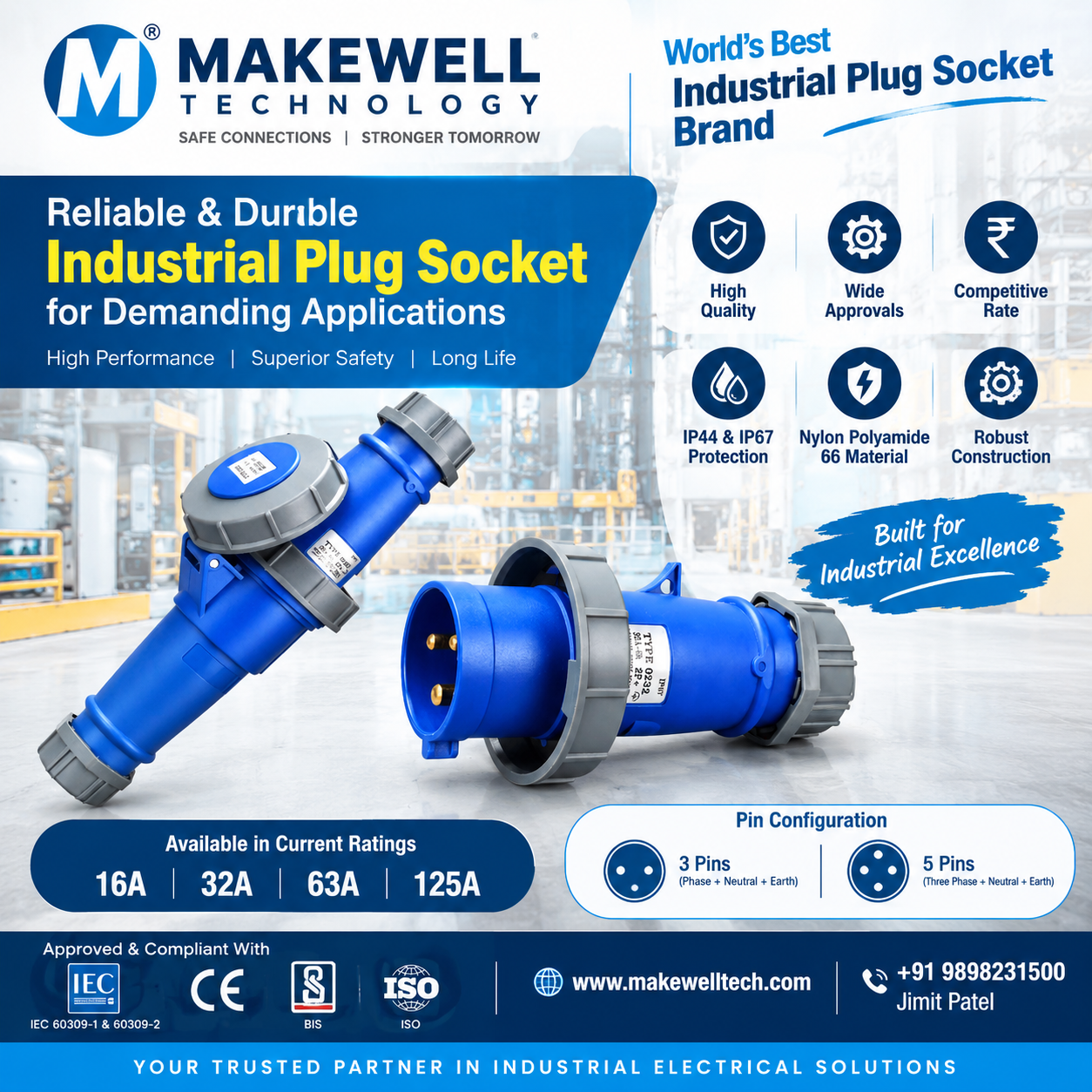
16A, 32A, 63A, 125A, 3 Pins and 5 Pins Industrial Plug Socket Selection
Learn how to select the right 16A, 32A, 63A or 125A industrial plug socket and understand when to choose 3-pin or 5-pin configurations for safe and reliable electrical connections.
16A, 32A, 63A, 125A, 3 Pins and 5 Pins Industrial Plug Socket Selection
Choosing the correct industrial plug socket is important for electrical safety, equipment performance and long-term reliability. In factories, workshops, construction sites, warehouses, commercial facilities and other demanding environments, industrial electrical connections are exposed to higher loads, frequent plugging and unplugging, dust, moisture, vibration and mechanical stress. This is why an industrial plug socket should never be selected only by looking at its physical size or price.
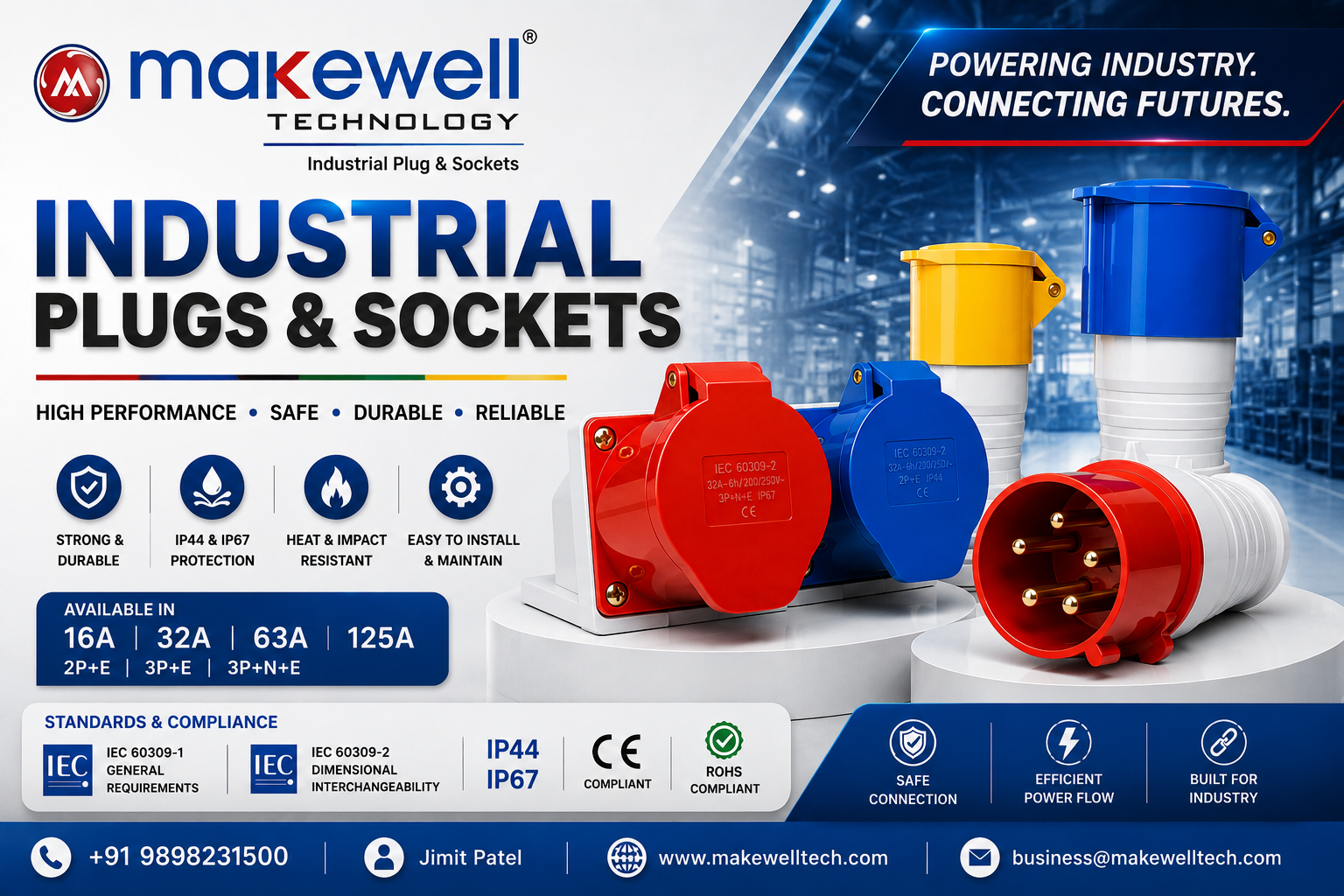
The correct selection normally depends on several factors, including the equipment's current requirement, supply voltage, number of phases, neutral requirement, earthing arrangement, environmental conditions and the type of electrical protection installed upstream. The most commonly used current ratings include 16A, 32A, 63A and 125A, while industrial plug and socket configurations are commonly available in 3-pin and 5-pin arrangements.
Understanding the difference between these ratings and configurations helps buyers avoid undersized or unsuitable electrical connections. A properly selected industrial plug socket can provide a secure connection, reduce the risk of overheating and support reliable operation of connected machinery.
This guide explains how to select 16A, 32A, 63A and 125A industrial plug sockets, when to choose 3 pins or 5 pins, and why factors such as IP protection, cable selection, earthing and electrical load must be considered before purchasing.
Why Current Rating Is the First Factor in Industrial Plug Socket Selection
The current rating is one of the most important factors when selecting an industrial plug socket. Ratings such as 16A, 32A, 63A and 125A indicate the current capacity for which the plug and socket assembly is designed under its specified operating conditions. The correct rating should be selected according to the actual electrical load and the requirements of the complete electrical installation rather than simply choosing the largest available rating.
For example, a machine designed to operate within a 16A supply may require a 16A industrial plug socket when the voltage, phase configuration, installation method and protection system are appropriate. A higher-rated socket is not automatically a better choice because the entire circuit, including the cable, protective device, plug, socket and connected equipment, must be compatible.
Similarly, equipment requiring a higher current may need a 32A, 63A or 125A industrial connection. Heavy-duty machinery, large motors, welding equipment, industrial heating systems and distribution applications can have significantly different electrical requirements.
The current rating should therefore be treated as part of a complete electrical design. The electrician or electrical engineer should consider operating current, starting current where applicable, continuous load, cable capacity, protective device rating and the manufacturer's equipment specifications.
The basic principle is simple: select an industrial plug socket that is suitable for the equipment and the complete circuit. Avoid selecting a rating merely because it appears stronger or more economical.
How to Select a 16A Industrial Plug Socket for Electrical Equipment
A 16A industrial plug socket is commonly suitable for relatively smaller industrial and commercial electrical loads where the equipment's electrical requirements fall within the rated capacity of the connection. It can be used for suitable portable machinery, tools, lighting equipment, small industrial appliances and other applications where a robust industrial connection is required.
However, the decision should not be based only on the equipment's normal operating current. The supply voltage, number of phases, frequency, earthing arrangement and starting characteristics of the connected equipment also need to be considered. Motors and certain machinery can draw considerably higher current during starting, so the electrical design should account for this condition.
A 16A socket can be available in different pin configurations depending on the electrical supply. The appropriate configuration should be selected according to whether the application requires phase, neutral and earth connections or a three-phase arrangement with neutral and earth.
Environmental conditions are also important. For a relatively clean indoor environment, a suitable IP-rated industrial socket may be sufficient. Where the socket is exposed to water, dust, cleaning operations or outdoor conditions, a higher ingress-protection level such as IP67 may be more appropriate, provided the complete installation is designed accordingly.
For industrial applications, the quality of the housing material, contact system, terminals, cable entry and mechanical construction should also be evaluated. A reliable 16A industrial plug socket should provide a secure electrical connection and withstand the expected operating environment.
When Should You Choose a 32A Industrial Plug Socket?
A 32A industrial plug socket is generally considered when the connected equipment requires a higher current capacity than a suitable 16A connection can provide. It is widely relevant to industrial machinery, workshop equipment, pumps, compressors, power tools, distribution arrangements and other electrical equipment that requires a robust higher-current connection.
The correct 32A configuration depends on the electrical supply. Some equipment may require a phase, neutral and earth arrangement, while three-phase equipment may require three phases and earth. Other equipment may require three phases, neutral and earth, which is where a 5-pin configuration can become appropriate.
This distinction is important because pin count is not simply a matter of choosing a socket with more contacts. Each contact has a specific electrical purpose, and the plug, socket, supply cable, equipment and protective system must all be compatible.
Before choosing a 32A industrial plug socket, the equipment nameplate should be checked for rated voltage, current, phase and frequency. The circuit design should also confirm that the cable and protective device are appropriate for the load. If the equipment has a motor or another high-starting-current characteristic, that should be considered as part of the electrical design.
For industrial buyers, another important consideration is the environment. A socket used inside a clean electrical room may have different requirements from one installed in a factory production area or outdoor location. Mechanical strength, sealing, IP protection, material quality and cable-entry design can significantly affect service life.
Therefore, 32A should be selected because the application requires that rating, not simply because it provides a higher number than 16A.
Understanding 63A Industrial Plug Sockets for Higher-Power Applications
A 63A industrial plug socket is intended for applications requiring substantially higher current capacity and is commonly associated with heavier industrial equipment, temporary power distribution, machinery, large tools, construction equipment and other demanding electrical applications. At this current level, proper electrical design becomes particularly important because cable sizing, protective devices, termination quality and thermal considerations can have a major impact on safety and performance.
When selecting a 63A industrial socket, the first step is to identify the electrical supply and equipment requirement. A three-phase machine may require a suitable 5-pin arrangement when a neutral connection is required in addition to the three phases and protective earth. Another application may use a different pole configuration depending on the system design.
The socket's voltage rating must also match the supply. Current rating alone is not enough to determine whether a plug and socket are suitable. The frequency, phase configuration, earthing arrangement and equipment specifications should all be checked before installation.
For 63A connections, the quality of the contact materials and terminals becomes increasingly important. Poor-quality contacts or improperly tightened terminals can create resistance and heat at the connection point. The cable gland and cable termination should also be appropriate for the cable used and the environmental conditions.
If the socket is installed in an area exposed to water, dust, oil, washing or outdoor conditions, suitable ingress protection should be considered. An IP67 industrial plug socket can be useful in applications where protection against dust and temporary water immersion is required, subject to the specifications of the actual product and installation.
A properly selected 63A industrial connection provides a practical solution for higher-power equipment while maintaining a secure and serviceable electrical interface.
When Is a 125A Industrial Plug Socket Required?
A 125A industrial plug socket belongs to a much higher current category and is normally considered for demanding industrial power applications, heavy machinery, power distribution and other equipment where lower-rated industrial plug and socket systems are not sufficient. At this level, selection should be carried out with particular attention to the complete electrical installation.
A common mistake is to select a 125A socket simply because the equipment has a large motor or high power rating. The actual operating current, starting characteristics, voltage, phase configuration and duty cycle need to be evaluated first. The electrical distribution system must also be capable of safely supplying the required load.
Cable selection is especially important for a 125A application. The cable must be appropriately sized according to current capacity, installation method, ambient conditions, voltage drop and applicable electrical requirements. The upstream protective device must also coordinate correctly with the cable and connected equipment.
The plug and socket themselves should have appropriate mechanical construction, contact capacity, terminal design and cable-entry arrangement. At higher current levels, poor termination or loose connections can result in significant heating and potentially serious electrical problems.
Environmental protection should also be considered. Industrial facilities can have areas with dust, moisture, oil, chemicals, washing processes or outdoor exposure. The required IP protection should therefore be selected based on the actual environment.
A 125A industrial plug socket should be viewed as part of a complete power connection system rather than an isolated product. Professional electrical assessment is particularly important for high-current applications to ensure that the plug, socket, cable, protection and equipment are properly matched.
3 Pin vs 5 Pin Industrial Plug Socket: Which One Should You Choose?
The decision between a 3-pin and 5-pin industrial plug socket should be based on the electrical supply and the connections required by the equipment. The number of pins does not directly indicate whether a socket is stronger, safer or more powerful. Instead, the pins provide the required electrical conductors for the particular supply arrangement.
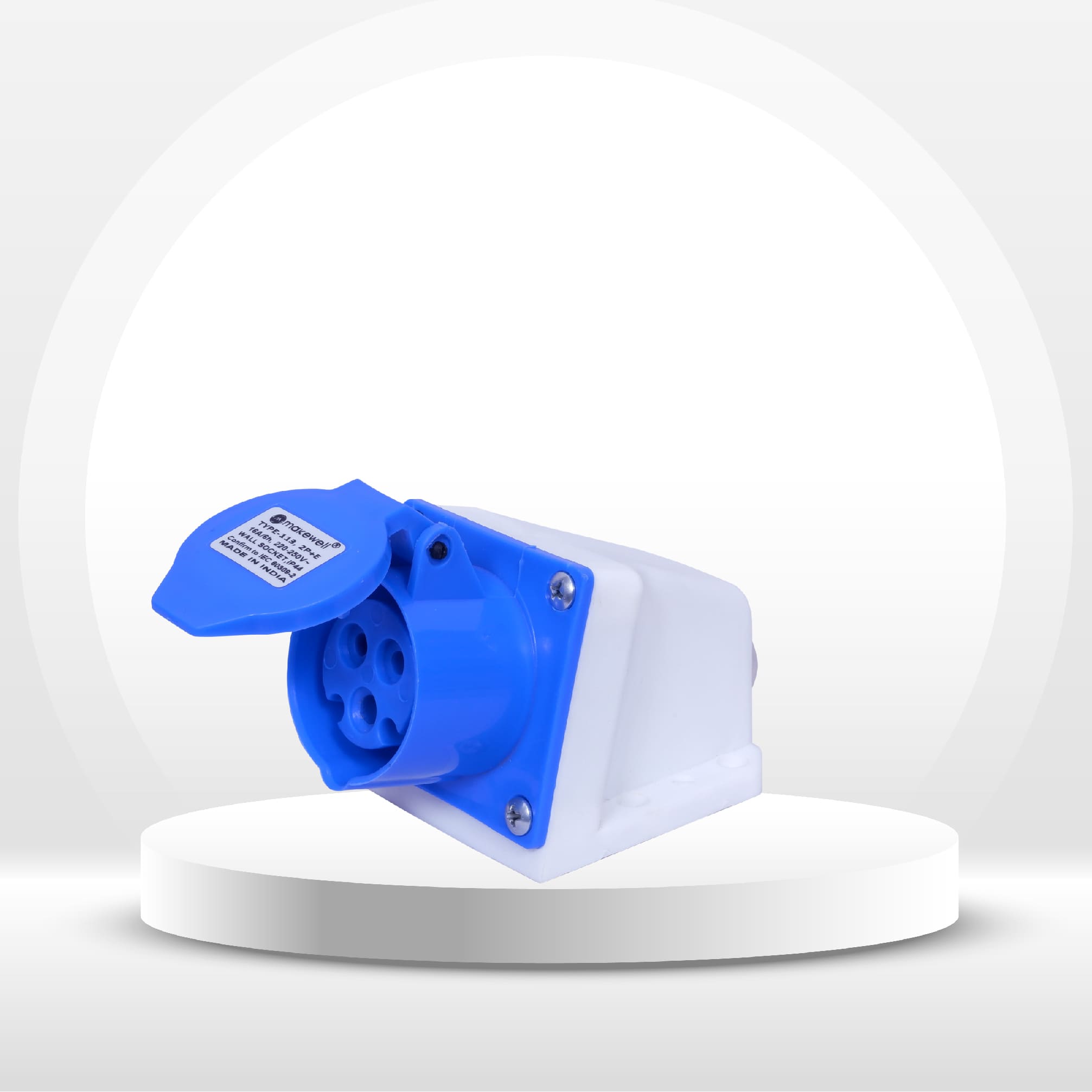
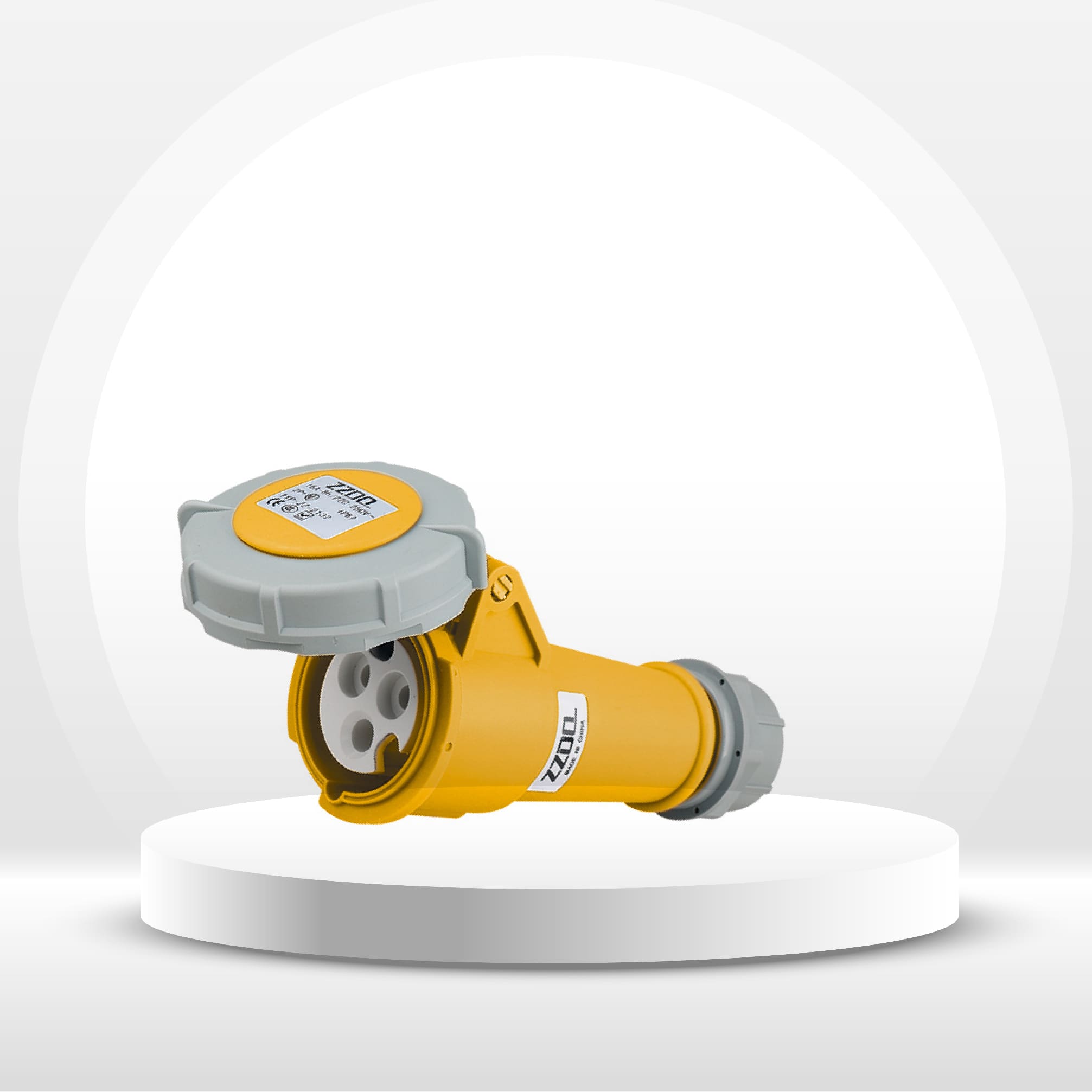
A common 3-pin industrial configuration can provide connections for phase, neutral and protective earth in an appropriate single-phase application. This type of connection is commonly relevant to equipment that operates from a single-phase supply and requires a dedicated protective earth connection.
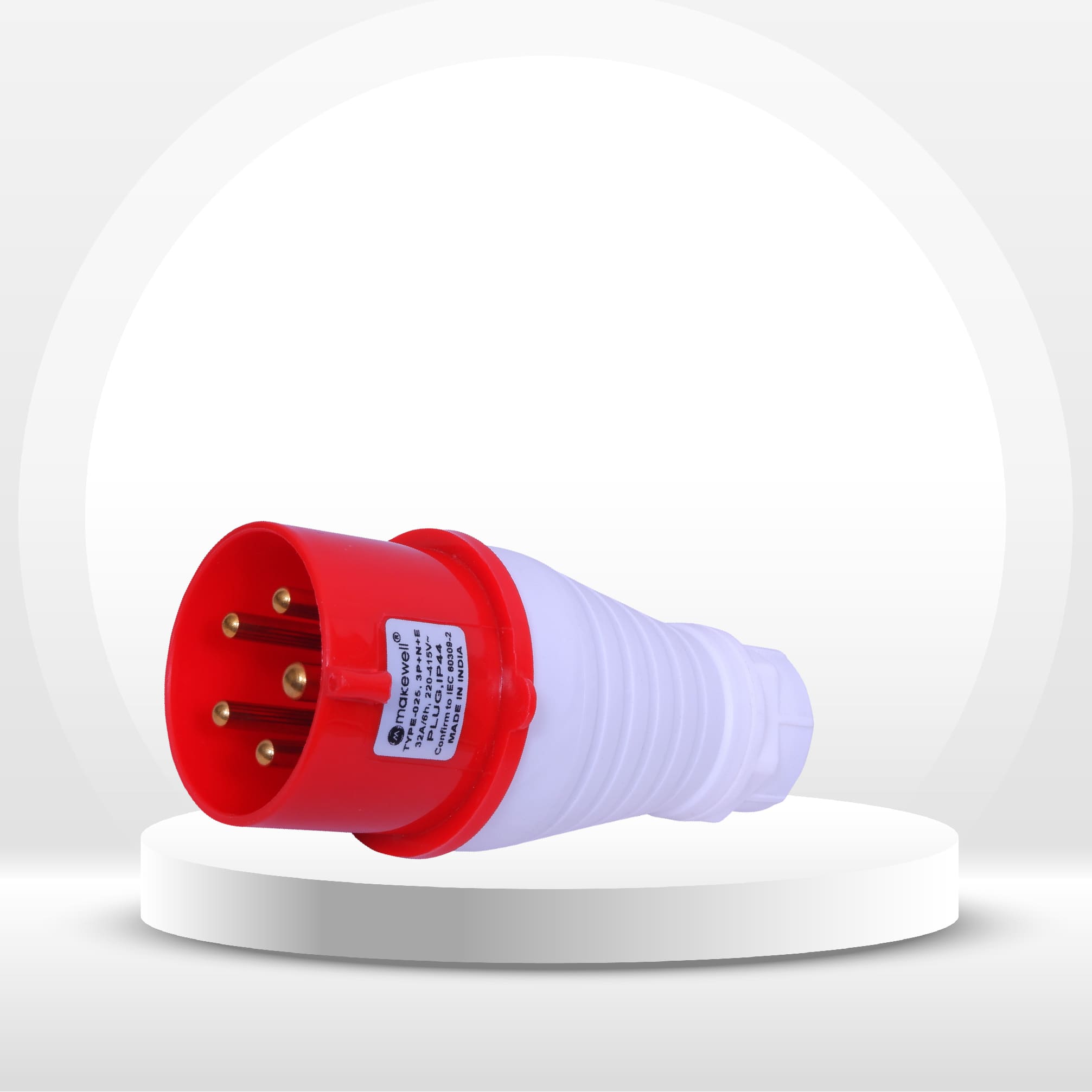
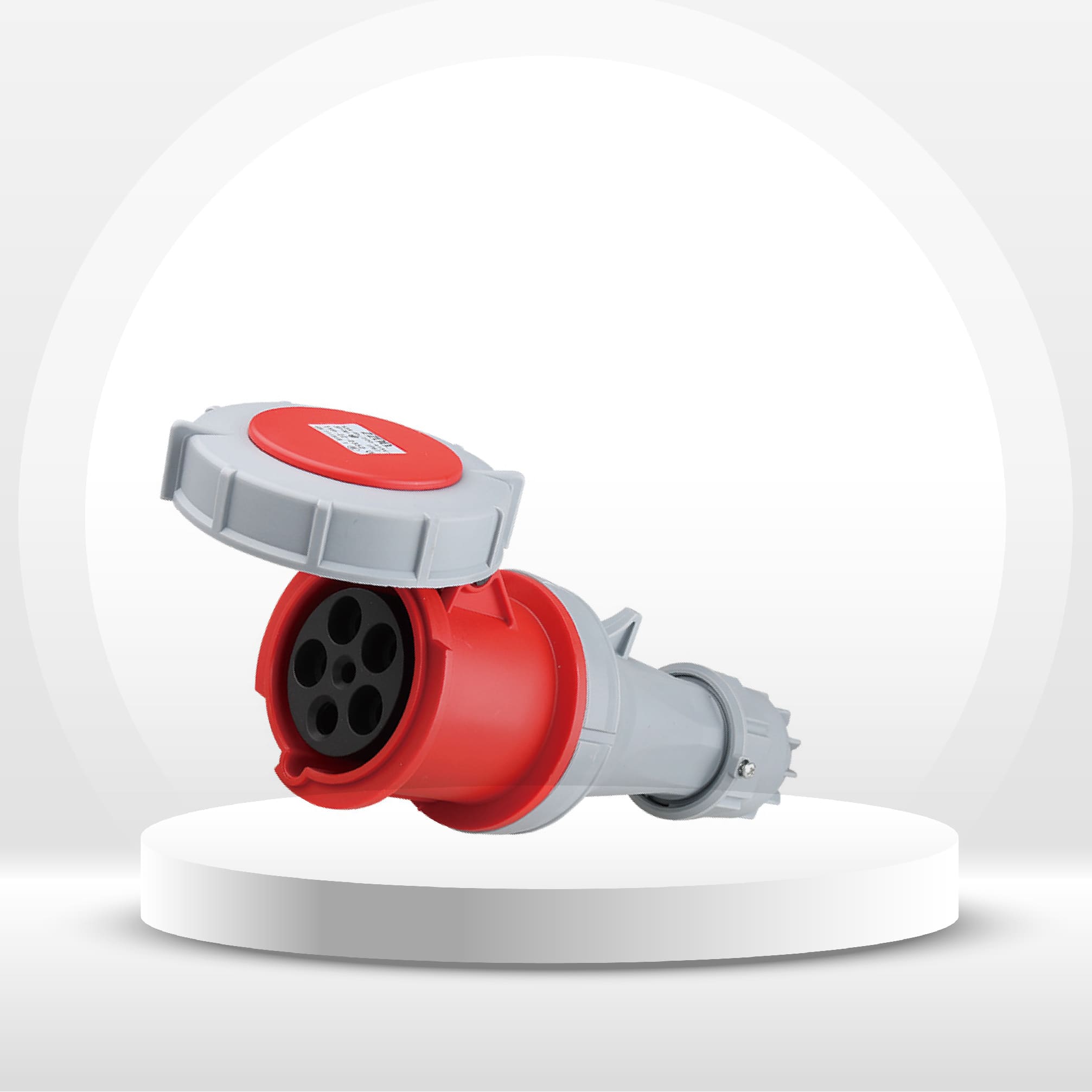
A 5-pin industrial configuration is commonly associated with three-phase systems where three phase conductors, neutral and protective earth are required. This can be appropriate for equipment that needs a three-phase supply and also requires a neutral conductor for certain circuits.
However, the exact configuration should always be confirmed from the equipment specification and electrical system. A three-phase machine does not automatically mean that every application requires a 5-pin connection. Some equipment may not require a neutral, depending on its design and supply arrangement.
The most important point is that the plug and socket must match the supply configuration. A 3-pin plug should not be treated as interchangeable with a 5-pin socket, and a 5-pin configuration should not be selected merely because it appears more advanced.
Understanding the phase, neutral and earth requirements of the equipment is therefore essential when choosing between 3-pin and 5-pin industrial plug sockets.
Why IP44 and IP67 Matter When Selecting an Industrial Plug Socket
Ingress protection is another major consideration when selecting an industrial plug socket. Industrial electrical connections may be installed in environments where dust, water, moisture or other contaminants are present. IP ratings help indicate the level of protection provided by an enclosure against the ingress of solid objects and water under defined test conditions.
IP44 and IP67 are commonly discussed for industrial electrical products, but they are intended for different levels of environmental protection. IP44 provides protection against solid objects above a specified size and splashing water from different directions under the applicable test conditions. IP67 provides a significantly higher level of protection against dust and includes protection against temporary immersion under specified test conditions.
This does not mean that an IP67 socket is automatically suitable for every outdoor or wet application. The complete installation, cable entry, plug connection, enclosure, mounting arrangement and operating conditions must all be considered.
For a clean indoor factory environment, an appropriately rated IP44 industrial plug socket may be sufficient for the application. In areas exposed to water, dust, heavy cleaning or more demanding environmental conditions, an IP67 industrial plug socket may be a more appropriate choice.
The correct IP rating should therefore be selected according to the real installation environment. Buyers should avoid choosing an IP rating only for marketing reasons. The manufacturer's technical specification should be checked to understand exactly what the stated protection level covers.
For industrial plug socket selection, electrical rating and environmental protection should always be evaluated together.
How Voltage, Phase, Neutral and Earthing Affect Industrial Socket Selection
Current rating is important, but it is only one part of industrial plug socket selection. Voltage, phase configuration, neutral requirement and earthing are equally important because they determine whether the selected plug and socket can correctly connect the equipment to the electrical supply.
The first step is to check the equipment nameplate or technical documentation. The rated voltage and frequency should correspond with the intended electrical supply. A socket with the correct current rating but an unsuitable voltage configuration should not be selected.
The number of phases must also be identified. Single-phase equipment has different connection requirements from three-phase equipment. Where a neutral conductor is required, the socket configuration must provide an appropriate neutral contact. Protective earth is an essential part of many industrial electrical connections and should be provided according to the electrical system and applicable requirements.
Correct earthing is particularly important for industrial equipment because machinery may have metal bodies and exposed conductive parts. The protective earth connection provides an important path for fault protection when properly designed and installed.
Industrial plug and socket systems can also incorporate different keying or clock-position arrangements depending on voltage and frequency configurations. These design features can help prevent unsuitable connections between different electrical systems.
For this reason, the correct selection process should begin with the equipment and supply specification rather than starting with a preferred socket model. Once voltage, current, phase, neutral and earth requirements are understood, the appropriate industrial plug socket configuration can be selected.
How Cable Size, MCB, RCCB and Electrical Protection Influence Socket Selection
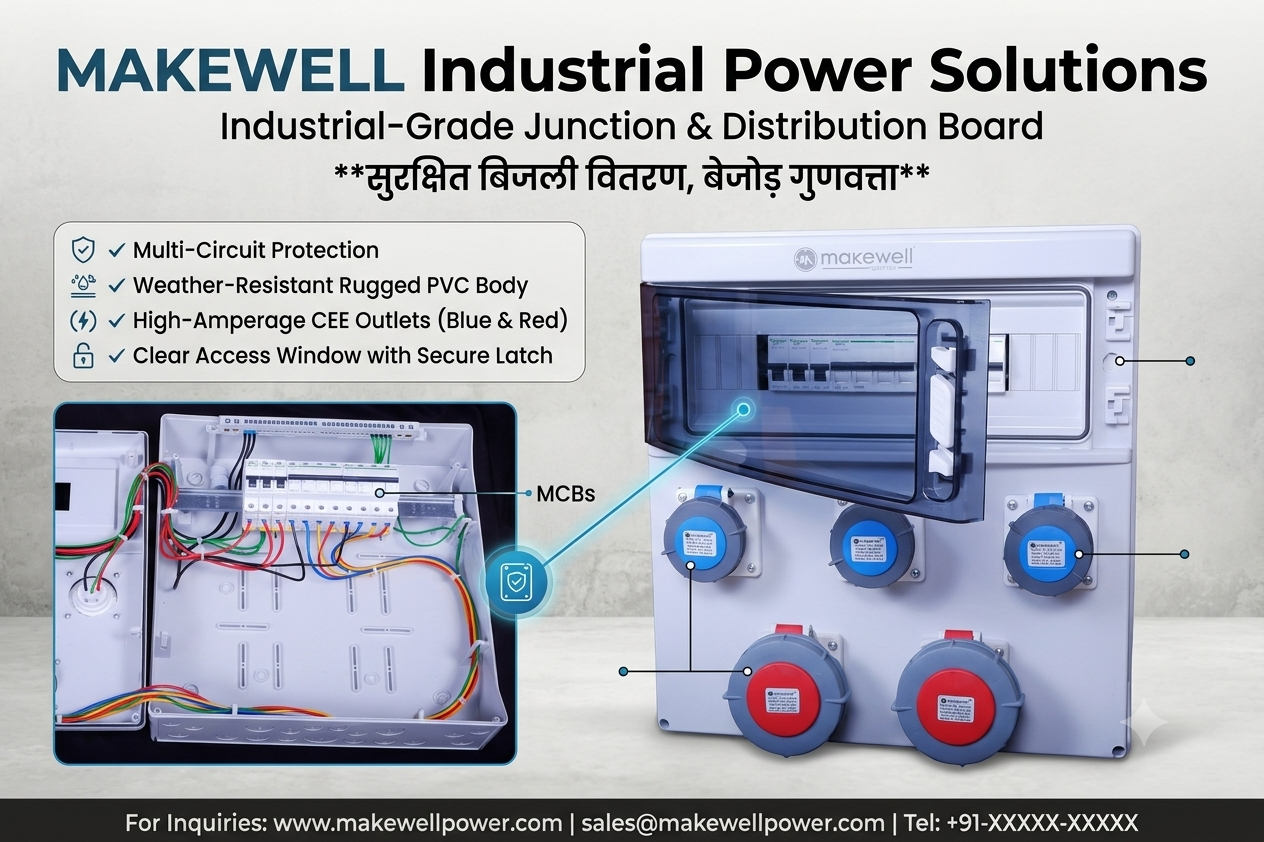
An industrial plug socket cannot be considered separately from the electrical protection system. The cable, MCB, RCCB or RCBO, plug, socket and connected equipment form part of one electrical circuit. If one component is incorrectly selected, the overall installation may not provide the intended level of protection.
Cable selection should consider the expected load current, installation method, conductor material, ambient temperature, grouping, permissible voltage drop and applicable electrical requirements. The protective device should then be coordinated with the cable and equipment. Simply installing a higher-rated MCB because the machine occasionally draws more current is not a safe method of circuit design.
RCCB protection and, where appropriate, RCBO protection can provide additional protection against residual-current faults. However, these devices do not replace correct cable sizing, earthing, overcurrent protection or proper installation practices.
The industrial socket's rated current should also be compatible with the circuit design. For example, selecting a 32A socket does not mean that every 32A circuit must use exactly the same cable or MCB arrangement. Actual selection depends on the complete electrical design and the specific installation conditions.
Terminations are equally important. Cable lugs, terminals, glands and tightening arrangements should be suitable for the conductor and socket design. Loose or poorly terminated connections can cause resistance heating even when the nominal current rating appears correct.
A professional installation therefore looks at the complete system rather than treating the industrial plug socket as an independent component. This approach improves reliability, safety and long-term performance.
How to Select the Right Industrial Plug Socket for Factory Applications
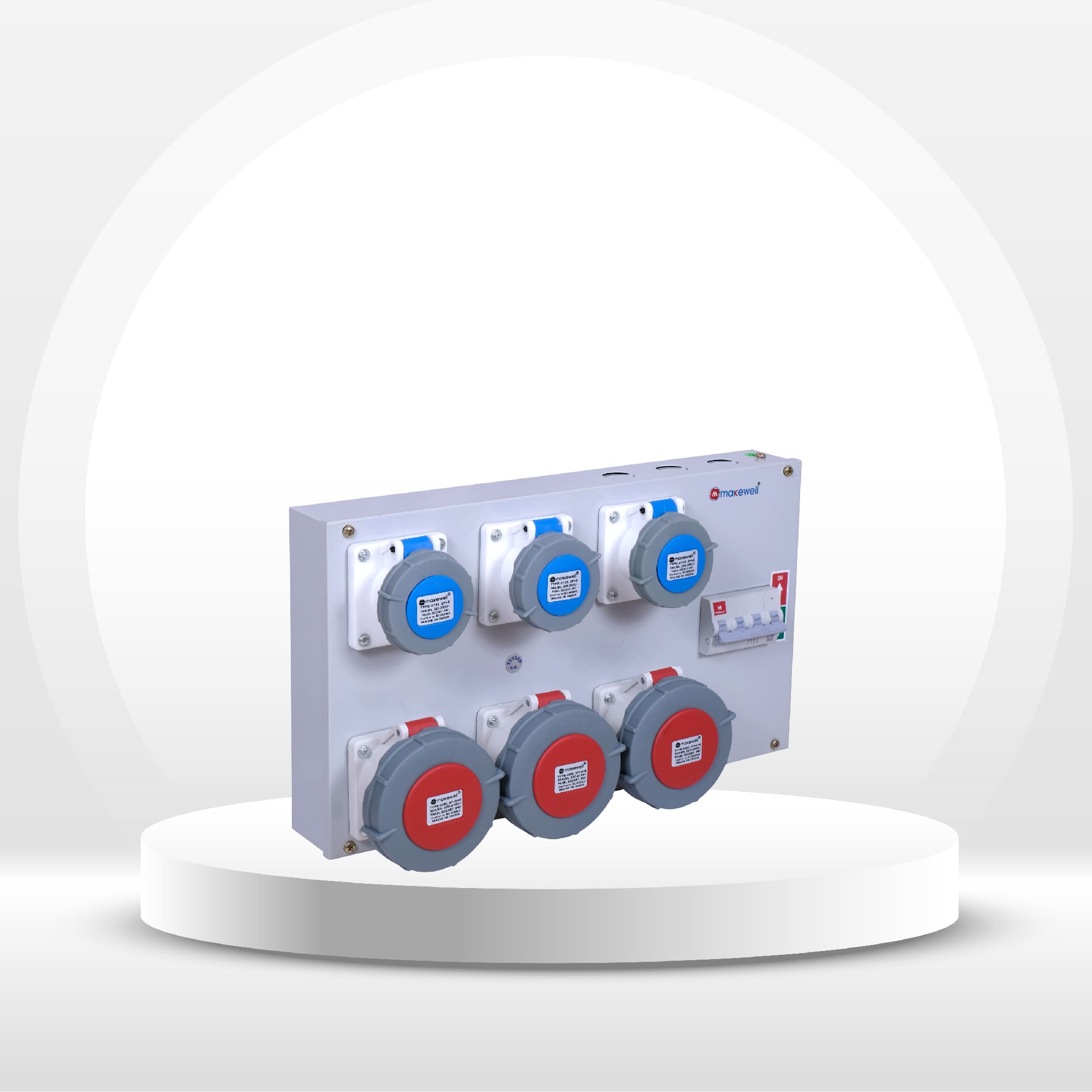
Factory environments can contain very different electrical loads, so there is no single industrial plug socket that is best for every application. The correct selection starts by understanding what equipment will be connected, how much current it requires and what type of electrical supply is available.
For smaller suitable industrial loads, a 16A connection may be appropriate. Equipment requiring greater current may require a 32A connection, while heavier machinery and distribution applications can require 63A or 125A systems. The correct current rating should always be verified from the equipment specification and electrical design.
The pin configuration should then be selected according to the required electrical conductors. A suitable 3-pin configuration may be used for an appropriate single-phase phase-neutral-earth application, while a 5-pin configuration is commonly used where three phases, neutral and protective earth are required.
The factory environment should also influence the IP rating and construction. A production area with dust, water or regular cleaning may require stronger environmental protection than a clean indoor electrical room. Material quality is also important because industrial sockets are repeatedly handled and may experience mechanical stress.
For manufacturers and procurement teams, it is useful to evaluate the socket's rated current, voltage, pin configuration, IP rating, material, contact construction, cable-entry arrangement, applicable standards and overall build quality.
The best industrial plug socket is therefore not simply the highest-rated or lowest-priced product. It is the product whose electrical, mechanical and environmental specifications correctly match the intended application.
Frequently Asked Questions (FAQ)
How do I select between 16A, 32A, 63A and 125A industrial plug sockets?
The selection should be based on the actual electrical requirement of the connected equipment and the complete circuit design. Check the equipment's rated current, voltage, phase configuration and starting characteristics, then confirm that the cable, protective devices, plug and socket are compatible. A higher current rating should not be selected simply because it appears safer or stronger.
What is the difference between a 3-pin and 5-pin industrial plug socket?
The difference is primarily the number and purpose of the electrical contacts. A suitable 3-pin configuration can provide phase, neutral and earth connections for an appropriate single-phase application. A 5-pin configuration is commonly used where three phases, neutral and protective earth are required. The exact configuration must be confirmed from the equipment and supply requirements.
Is IP67 better than IP44 for an industrial plug socket?
IP67 provides a higher level of ingress protection than IP44 under the applicable test conditions, particularly against dust and temporary water immersion. However, IP67 is not automatically necessary for every application. The correct rating depends on the actual installation environment, including exposure to water, dust, cleaning and outdoor conditions.
Can I use a 32A industrial socket for a 16A machine?
It should not be assumed that a higher-rated socket is automatically suitable. The complete circuit and equipment connection must be designed correctly, including cable sizing, protective devices, plug configuration and equipment requirements. The plug and socket rating must be compatible with the intended electrical installation.
Which industrial plug socket is suitable for factory machinery?
There is no universal answer because factory machinery has different current, voltage and phase requirements. The correct socket should be selected according to the machine's electrical specifications, required pin configuration, environmental conditions, IP protection, cable arrangement and electrical protection. For demanding environments, a robust industrial plug socket with appropriate ingress protection and quality construction should be considered.
Conclusion
Selecting the correct 16A, 32A, 63A or 125A industrial plug socket is not simply a matter of choosing a current rating or counting the number of pins. A reliable selection requires consideration of the complete electrical application, including current, voltage, phase, neutral, protective earth, cable capacity, circuit protection and environmental conditions.
The choice between 3-pin and 5-pin industrial plug sockets should be made according to the electrical supply and equipment requirements. Similarly, IP44 and IP67 should be selected according to the environment in which the socket will operate. Dust, water, cleaning, outdoor exposure and mechanical conditions can all influence the required product specification.
For industrial applications, product quality also matters. Strong housing material, reliable contacts, secure terminals, suitable cable entry and proper manufacturing quality can contribute to dependable long-term operation. Applicable technical standards and manufacturer specifications should also be checked before purchase and installation.
Whether the requirement is a 16A industrial plug socket for smaller equipment, a 32A connection for machinery, a 63A socket for higher-power applications or a 125A industrial connection for heavy-duty power distribution, the correct approach is to match the product to the complete electrical system.
A properly selected industrial plug socket provides more than a power connection. It supports electrical reliability, equipment performance, safe operation and efficient industrial power distribution.
Recent Posts