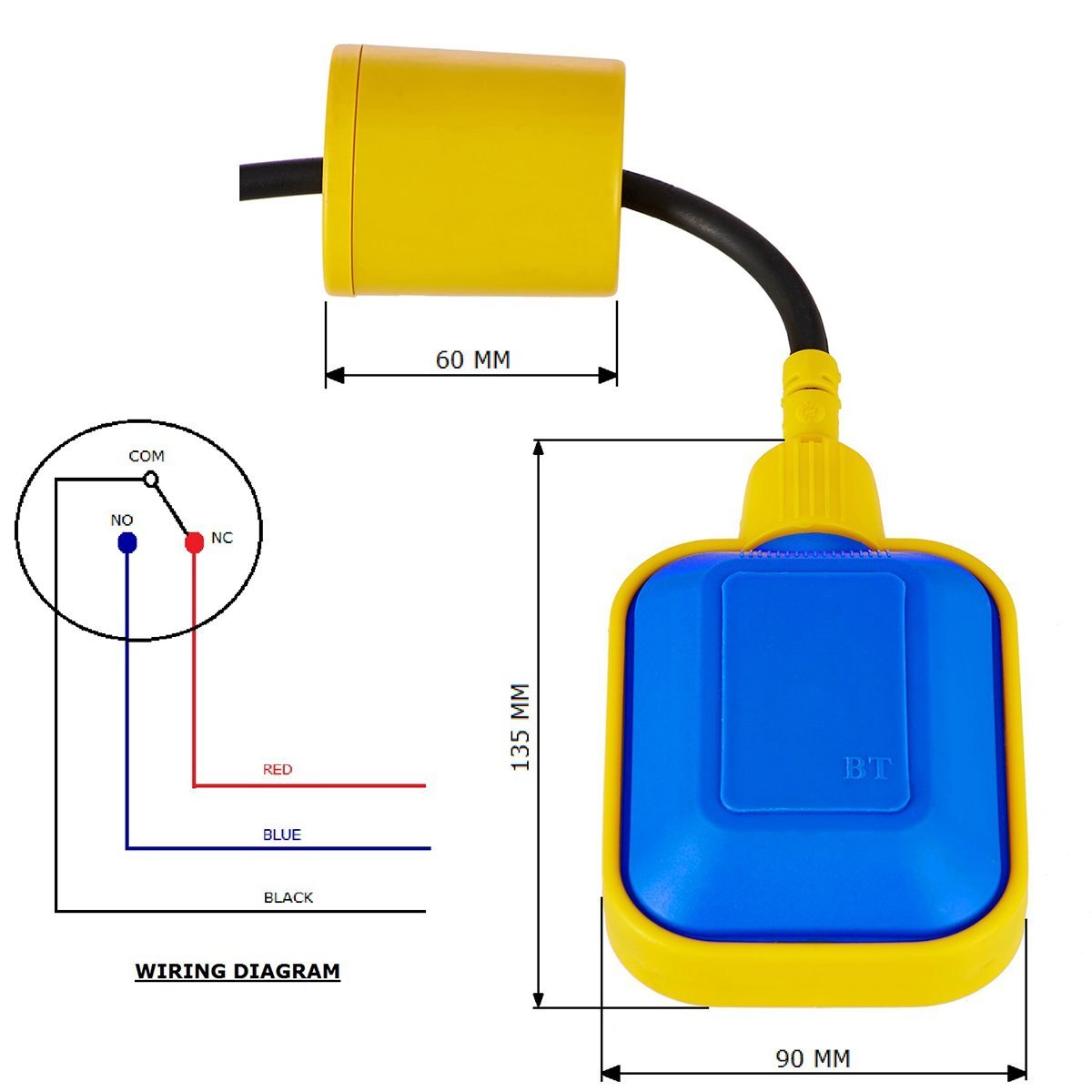
Float Switch 3 Meter, 5 Meter & 10 Meter – Automatic Water Level Control Solution
Makewell offers reliable 3 Meter, 5 Meter and 10 Meter Float Switches for automatic water level control in overhead tanks, underground water tanks, sump tanks, water pumps and industrial applications. Designed for convenient liquid level monitoring and pump automation, these float switches help manage water levels and reduce manual operation.
Float Switch 3 Meter, 5 Meter & 10 Meter – Automatic Water Level Control Solution
Water management is an important requirement in residential buildings, commercial properties, factories, manufacturing plants and industrial facilities. Whether water is stored in an overhead tank, underground sump, storage reservoir or industrial water tank, maintaining the correct water level is essential for smooth operations. A Float Switch 3 Meter, 5 Meter & 10 Meter provides a convenient solution for monitoring liquid levels and controlling water pumps automatically, depending on the connected electrical control system.
A float switch is an electrical level-sensing device that operates according to the movement of a floating body on the liquid surface. When the water level rises or falls, the float changes its position and operates an internal switching mechanism. This signal can be used to start or stop a water pump through a suitable electrical circuit, helping reduce manual intervention and unnecessary pump operation.
Makewell provides float switch solutions in different cable length options, including 3 meter, 5 meter and 10 meter, to support different tank sizes and installation requirements. These options are useful for residential water storage, commercial buildings, agricultural applications and industrial water management systems. Selecting the appropriate float switch depends on tank depth, installation arrangement, liquid compatibility and electrical requirements.
What Is a Float Switch and How Does It Work?
A float switch is an electrical device designed to detect the liquid level inside a tank, reservoir, sump or other storage container. It works through the movement of a floating component that follows the rising and falling level of water. Inside the float switch, an electrical switching mechanism changes its contact condition when the float reaches a particular position. This switching action can be used to control a pump, activate an alarm or provide a signal to an automatic water level controller.
The working principle is straightforward. When the water level rises, the float moves upward. When the water level decreases, the float moves downward. Depending on the internal switching arrangement and installation position, the electrical circuit can open or close at the required level. This allows the connected control system to respond automatically to changing water levels.
For example, in an overhead water tank, a properly configured float switch can signal the control system to stop the water pump when the tank reaches its required upper level. In an underground storage tank, it can help prevent a pump from operating when the water level becomes too low, provided the system is designed for that function.
A float switch is therefore a practical component for water level automation. It reduces dependence on manual monitoring and supports efficient water management in homes, commercial buildings and industrial installations.
Float Switch 3 Meter – Suitable for Small and Medium Water Tanks
A 3 Meter Float Switch is a practical option for installations where the available cable length is sufficient to position the float correctly inside the water tank. It can be considered for residential overhead tanks, small underground sumps, commercial water storage systems and compact industrial water containers. The appropriate cable length helps installers position the sensing component according to the tank's dimensions and the required switching levels.
In residential applications, water pumps are often operated to transfer water from an underground tank to an overhead storage tank. Manually monitoring both tanks can become inconvenient, particularly in buildings where water consumption changes throughout the day. A suitably installed float switch can provide the required level signal to an automatic pump control arrangement, reducing the need for repeated manual checking.
A 3 Meter Float Switch may also be useful in small commercial facilities, workshops and other locations where water storage capacity is limited. However, buyers should not select a product based only on the cable length. The actual switching arrangement, mounting method, electrical contact rating and compatibility with the control circuit are equally important.
For reliable operation, the float must have sufficient freedom to move without touching the tank walls, pipes or other equipment. Correct installation helps maintain consistent level detection and reduces the possibility of unwanted switching.
Float Switch 5 Meter – A Versatile Option for Water Level Control
A 5 Meter Float Switch provides additional cable length for water storage installations that require greater flexibility during positioning. It can be considered for medium-sized overhead tanks, underground water storage tanks, commercial buildings, agricultural water storage and selected industrial applications. The longer cable gives installers more flexibility to position the float at the required operating level, depending on the tank layout and installation method.
Many commercial buildings and industrial facilities use separate water storage and pumping arrangements. In these systems, maintaining adequate water levels is important for sanitation, production activities, equipment cooling and general facility operations. A float switch can provide an automatic level signal to a suitable pump control panel, helping the system respond when water reaches a predetermined level.
The 5 Meter option can be useful when the distance between the cable entry point and the desired float position is greater than that available with a shorter cable. However, the actual switching range is determined by the installation arrangement and float movement, not simply by the cable length.
Before purchasing a 5 Meter Float Switch, users should check the electrical specifications, contact configuration, cable construction, liquid compatibility and intended application. Selecting the right model ensures that the switch works effectively with the connected pump or control equipment.
Float Switch 10 Meter – For Larger Tanks and Extended Installations
A 10 Meter Float Switch is designed for installations where a longer cable is required to position the sensing float at the desired location. It can be considered for larger water storage tanks, deep underground sumps, industrial water reservoirs, agricultural storage systems and other installations where the distance between the electrical connection point and the liquid-level sensing position is relatively large.
In industrial environments, water storage arrangements can be more complex than those found in residential buildings. Facilities may use multiple tanks, transfer pumps, storage reservoirs and dedicated water distribution systems. A float switch with an appropriate cable length can help provide the required level signal to the electrical control arrangement.
The 10 Meter cable option offers greater installation flexibility, particularly when the switching device needs to be positioned away from the control panel or electrical connection point. It is important to remember that a 10 Meter cable does not automatically mean that the switch can control a 10 Meter water-level range. The effective switching differential depends on the float design, mounting arrangement and cable positioning.
For industrial installations, buyers should pay particular attention to the manufacturer's technical specifications, cable suitability, electrical rating and compatibility with the liquid being monitored. A properly selected float switch can support reliable water level management while reducing unnecessary manual intervention.
Applications of Float Switches in Residential, Commercial and Industrial Areas
Float switches are used in many applications where monitoring and controlling liquid levels is necessary. Their simple operating principle makes them useful for water storage and pumping systems across different industries. In residential buildings, float switches can help automate the filling of overhead tanks and support the prevention of water overflow when connected to a compatible control circuit.
Commercial properties such as hotels, hospitals, shopping complexes, schools and office buildings often have underground sumps and overhead water storage systems. These facilities require dependable water management to support daily activities. Float switches can provide automatic level signals that help control water transfer between storage tanks.
In industrial environments, float switches can be used in manufacturing plants, workshops, warehouses, processing facilities, utility rooms and water distribution systems. They may also be incorporated into pump control panels, water treatment arrangements and liquid storage applications, subject to material and liquid compatibility.
Agricultural installations can use float switches in water storage tanks and selected irrigation-related systems. They help monitor the availability of stored water and support automatic pump operation when integrated with a suitable control arrangement.
The application determines the type of float switch required. Tank dimensions, liquid characteristics, operating temperature, electrical specifications and installation conditions should all be considered before selecting a suitable model. A correctly matched float switch helps improve convenience, supports water management and contributes to dependable pump operation.
Important Features to Consider When Buying a Float Switch
Selecting a suitable float switch requires more than comparing prices or choosing a cable length. The product should match the actual electrical and mechanical requirements of the installation. Cable length is an important consideration because it determines how much flexibility is available when positioning the float inside the tank. Makewell offers 3 Meter, 5 Meter and 10 Meter options to address different installation requirements.
The switching mechanism is another important factor. Buyers should understand whether the float switch provides normally open, normally closed or changeover contacts, as applicable to the product. The contact arrangement must be compatible with the intended control circuit. The electrical voltage and current ratings must also be checked before connecting the switch to any equipment.
Material quality is particularly important when the switch operates in water or other liquids. The float body, cable insulation, sealing arrangement and internal components should be suitable for the intended environment. For applications involving chemicals, wastewater or liquids other than ordinary water, compatibility should be confirmed with the manufacturer.
Installation flexibility, switching accuracy, mechanical durability and maintenance requirements also influence product selection. A reliable float switch should operate consistently under the expected conditions without unnecessary interference from tank walls, pipes or other objects. Reviewing the technical datasheet before purchase helps ensure that the selected model meets the application requirements.
Benefits of Using an Automatic Float Switch for Water Pumps
An automatic float switch can make water pump operation more convenient by providing a level-based electrical signal to a suitable control system. Without automatic level detection, building owners and maintenance teams may need to check water levels manually and operate pumps whenever a tank requires filling or emptying. This can become inconvenient when tanks are located on rooftops, underground or in areas that are difficult to access.
When correctly installed, a float switch can help stop a filling pump when the required upper water level is reached. In a suitable low-level protection arrangement, it can also help prevent a pump from running when the available water level becomes insufficient. These functions depend on the contact configuration and the electrical control circuit used.
Automatic level control can help reduce water wastage caused by overflowing tanks. It may also reduce unnecessary pump operation, depending on the system design, and improve convenience for building operators. In commercial and industrial facilities, these advantages can support better water management and reduce the need for continuous manual supervision.
Another benefit is the ability to integrate a float switch into a larger electrical control panel. It can work with suitable relays, contactors and pump controllers, provided the electrical ratings and circuit design are appropriate. This makes the float switch a useful component in both simple and more advanced water management systems.
How to Choose Between 3 Meter, 5 Meter and 10 Meter Float Switches
Choosing between a 3 Meter, 5 Meter and 10 Meter Float Switch depends primarily on the tank layout and the distance between the cable entry or electrical connection point and the required float position. A shorter cable may be sufficient for compact tanks, while medium and longer cable options provide additional flexibility for deeper or more widely arranged installations.
For smaller residential water tanks, a 3 Meter option may be appropriate if the cable can reach the intended operating position without excessive tension or obstruction. Medium-sized tanks and commercial storage installations may benefit from the flexibility of a 5 Meter option. Larger reservoirs, deep sumps and selected industrial installations may require a 10 Meter cable to position the float correctly.
However, cable length should not be confused with the maximum switching differential. The float's movement, mounting method and electrical operating arrangement determine the actual level-control performance. The installer should ensure that the float can move freely and that the cable is secured according to the manufacturer's instructions.
It is also essential to verify whether the selected switch is designed for filling control, emptying control or both. Buyers should confirm the contact configuration, electrical ratings and liquid compatibility before ordering. Selecting the correct model from the beginning helps avoid installation problems and supports dependable operation over the product's service life.
Installation and Maintenance of Float Switches
Correct installation is essential for achieving reliable performance from a float switch. Before installation, the tank should be inspected to identify a suitable location where the float can move freely without touching the side walls, internal pipes, pump equipment or other obstructions. The cable should be positioned and secured according to the manufacturer's installation instructions so that it does not become tangled or experience unnecessary mechanical stress.
The switching level should be adjusted according to the intended application. For an overhead tank filling arrangement, the upper switching level should be selected to prevent overflow while maintaining sufficient storage capacity. For a low-water protection arrangement, the switching point should be selected to maintain an appropriate water reserve for the connected pump.
Electrical connections should always be made by a qualified electrician. The float switch should be connected through an appropriate control circuit whenever required by its electrical rating and the pump's load characteristics. Directly switching a pump motor is not appropriate unless the switch is specifically rated for that load and operating condition.
Periodic inspection helps identify cable damage, contamination, mechanical obstruction and irregular switching. The float should be checked for unrestricted movement, and any maintenance should be performed after isolating the electrical supply. Following the manufacturer's instructions and maintaining the surrounding installation properly can help extend the service life of the water level control system.
Why Choose Makewell Float Switches for Water Level Control?
Choosing the right manufacturer is an important part of purchasing industrial electrical accessories. Buyers require products that suit their applications, have clearly defined technical specifications and provide dependable operation under the intended working conditions. Makewell focuses on industrial electrical products and water management accessories designed to support residential, commercial and industrial requirements.
Makewell Float Switches are available in different cable length options, including 3 Meter, 5 Meter and 10 Meter, allowing customers to select an option according to their tank dimensions and installation requirements. These options provide flexibility for applications involving overhead water tanks, underground sumps, commercial storage facilities and selected industrial water systems.
For customers, selecting a suitable product should involve checking the technical details rather than relying only on general product descriptions. Cable specifications, electrical ratings, contact configuration, material compatibility and installation requirements should be considered before finalizing an order. Makewell aims to help customers identify suitable industrial electrical solutions for their requirements.
Whether you are an electrical wholesaler, pump dealer, contractor, machinery manufacturer, industrial maintenance professional or end user, selecting the correct float switch is important for reliable water level management. Contact Makewell to enquire about the available 3 Meter, 5 Meter and 10 Meter Float Switch options, technical specifications and pricing for your application.
Frequently Asked Questions (FAQ)
What is the difference between a 3 Meter, 5 Meter and 10 Meter Float Switch?
The primary difference is the available cable length. A 3 Meter float switch is suitable when a shorter cable is sufficient, while 5 Meter and 10 Meter options provide additional flexibility for installations where the float needs to be positioned farther from the electrical connection point. The appropriate option depends on the tank layout and installation requirements.
Which float switch is best for an overhead water tank?
The best float switch depends on the dimensions of the tank, the required switching level, the pump arrangement and the electrical control system. A 3 Meter, 5 Meter or 10 Meter model may be suitable depending on the cable length required. The switch should be compatible with the pump control circuit and installed where the float can move freely.
Can a float switch automatically start and stop a water pump?
Yes. A float switch can provide an electrical signal to a compatible pump control system. Depending on its contact configuration and circuit arrangement, it can help start or stop a pump when the water reaches a predetermined level. The system must be designed according to the pump's electrical requirements.
Can a 10 Meter Float Switch be used in an industrial water tank?
A 10 Meter float switch may be suitable for industrial water tanks where its cable length, electrical specifications, material compatibility and switching arrangement meet the installation requirements. Buyers should confirm the product datasheet and application suitability before installation.
Where can I buy 3 Meter, 5 Meter and 10 Meter Float Switches in India?
You can contact Makewell to enquire about 3 Meter, 5 Meter and 10 Meter Float Switch options for residential, commercial and industrial water level control applications. Contact the company for product availability, technical specifications and pricing.
Conclusion
A Float Switch 3 Meter, 5 Meter & 10 Meter is a useful electrical component for water level monitoring and automatic pump control applications. Whether you need a float switch for a residential overhead tank, an underground water sump, a commercial building or an industrial storage reservoir, choosing the correct cable length and technical configuration is essential for reliable operation.
The 3 Meter option provides flexibility for installations requiring a shorter cable, while the 5 Meter option can accommodate a wider range of medium-sized storage arrangements. The 10 Meter option is useful when greater cable reach is required for deeper tanks and extended installations. However, the final selection should always consider the float's operating mechanism, electrical contact ratings, liquid compatibility and installation conditions.
Makewell offers float switch solutions in these three cable length options to address different water management requirements. A correctly selected and professionally installed float switch can help reduce manual monitoring, support automatic water pump operation and improve convenience in residential, commercial and industrial facilities.
If you are looking for a reliable Float Switch 3 Meter, 5 Meter or 10 Meter in India, contact Makewell for product details, technical specifications and pricing. Choose the appropriate water level control solution for your application and make your water management system more convenient and efficient.
Recent Posts